


Product Description
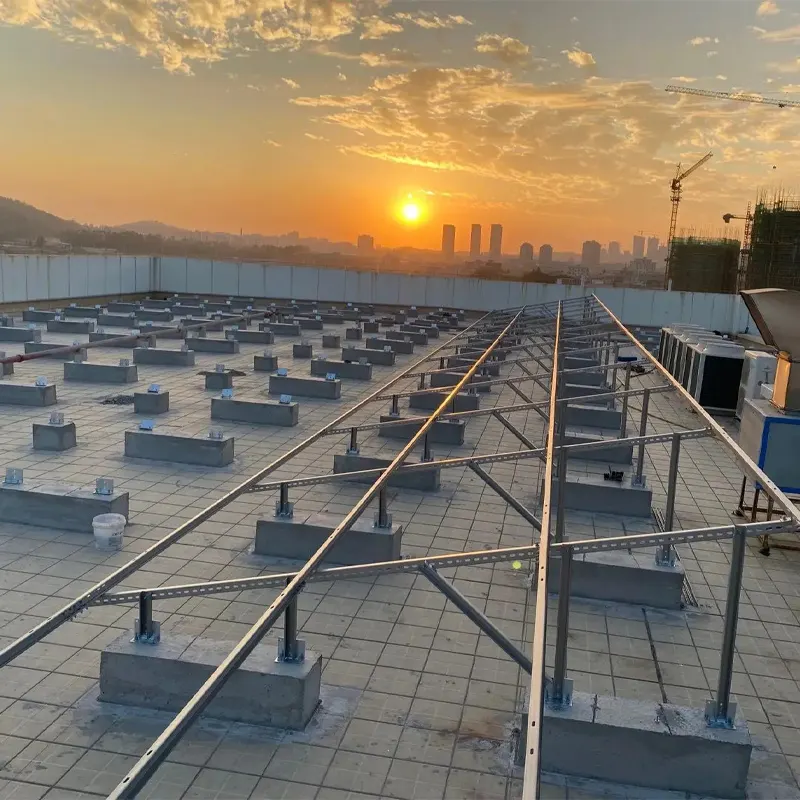
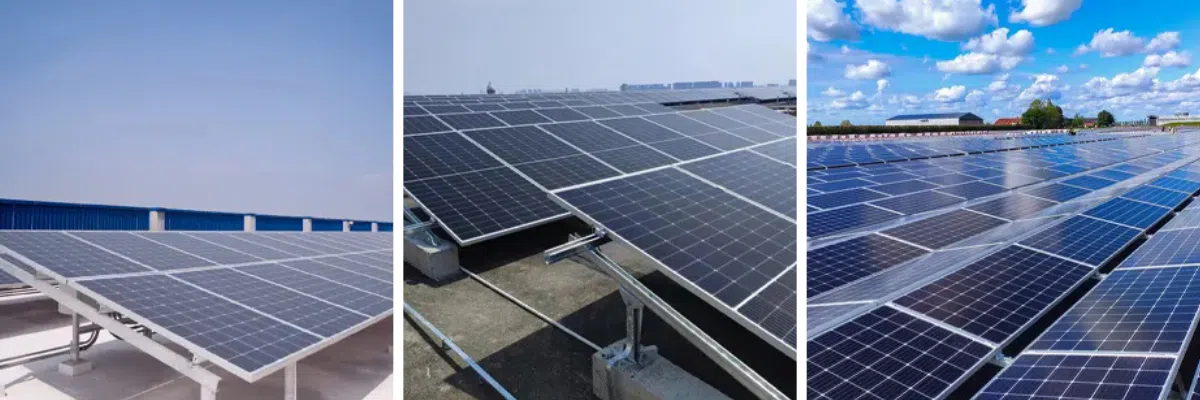
Flat roof mounting solution without roof penetration. It is fixed by concrete ballast blocks, fully preserving the roof waterproof structure. Simple and fast installation with zero damage to the original building structure, suitable for various industrial and commercial concrete flat roofs.
Product Parameters
| Main material | Hot-dip galvanized steel / aluminum |
| Ballast | Precast concrete blocks |
| Design wind speed | 40-42 m/s (3-s gust at 10 m, 50-year return reference), with ballast 80-120 kg/㎡ |
| High-wind option | For 50 m/s, 150-200 kg/㎡ or mechanical anchoring, calculated per project wind pressure |
| Design snow load | 1.0 kN/㎡ ≈ 21 psf (EN 1991-1-3; ballast counted separately as roof dead load) |
| Module compatibility | Up to 2278×1134×30 mm, ≤35 kg |
| Tilt angle | 5°-15° |
| Ballast design | Set per project basic wind pressure; the ballast schedule must be confirmed by a project-specific calculation |
| Design life | 25 years |
| Warranty | 10 years |
Our Services
We provide full-cycle seller services for solar mounting systems. Our engineering team can offer customized solutions for different working conditions such as rooftop, ground-mount and solar carport.
Every batch of goods is inspected before shipment to ensure corrosion resistance and structural safety.
From quick quotation, drawing confirmation and production schedule update to container loading arrangement and after-sales technical guidance, our sales and engineering team respond promptly to your bulk orders and project inquiries.

FAQ
Q1: How much ballast weight is needed per ㎡?
A1: Calculated from project wind pressure: 80–120 kg/㎡ for 40–42 m/s; for 50 m/s, 150–200 kg/㎡ or mechanical anchoring is required. Professional ballast calculation reports available.
Q2: Will it be blown away by strong wind?
A2: Aerodynamic design + sufficient concrete ballast; the ballast schedule above covers 40–42 m/s, higher wind speeds require the reinforced scheme described.
Q3: Will ballast damage roof waterproofing?
A3: Rubber pads under ballast blocks evenly disperse pressure and avoid direct wear on the waterproof layer.
Q4: Is it suitable for high-rise buildings?
A4: Most recommended for low/mid-rise industrial & commercial buildings; penetration solutions are better for super high-rises.


